Showing posts with label Ecuador. Show all posts

Sunday, April 1, 2018

Wings Over The World...


 Hard to believe, but the nice folks at the Carlisle Visitors Center in the Lorain County Metroparks actually asked me to come back again! For the month of April I have photos that I took on birding trips to Panama, Ecuador, England and Wales...and most of them are even in focus!

 A sleepy Shining Sunbeam seen early in the morning in Ecuador.

 This Collared Aracari was having a party with all of the food available in Panama.

The Pied Avocet is the symbol of the Royal Society for the Protection of Birds in the UK.

Monday, October 5, 2015

Books and Books and MORE Books!


 Oboy! It's just like Christmas when I get new bird and bug books to peruse! They come in handy for trying to figure out what the heck I took a photo of last weekend...or a few years ago. Here's four of my latest additions to the library...

 I discovered hoverflies (or flowerflies as they're known in the U.S.) a few years ago when I started using a macro lens to shoot flowers and bee bumbles in our garden. These little beauties mimic bees and wasps and gather nectar from flowers. Their mimicry makes them appear as an insect that can sting and should be avoided as food by predators, but they're harmless tiny pollinators.

An image from the guide on their life cycle.

"Britain's Hoverflies, A Field Guide" by Stuart Ball and Roger Morris is a wonderful guide to these tiny gems of the gardens. Illustrated with photos of 167 of the most common and easily identified species of Britain, it also has a complete list of the 283 species recorded in Great Britain.

It has at least one member of each genera with ID info, similar species and observation tips, whether it's a large or small species or a fuzzy bee bumble copy cat, colours and other noticeable features.. A range map with expected dates is shown for each as well. If you have the slightest interest in what may be lurking in your gardens, this would be a great addition to your buggy library. I would love to find a version of this guide for North American flower flies!


This Eristalis transversa sp. was taken here in Ohio, but, like me, they have relatives in Britain too!
(Page 200 if you're curious!)


Me and The Doodles made a visit to Britain a number of years ago to visit a friend and chase birds. This book would have made a great addition to our luggage! We didn't see a lot of butterflies as we spent most of the time looking up into the trees and worrying about driving on the "wrong" side of the road!

"Britain's Butterflies, A field guide to the butterflies of Britain and Ireland" by David Newland, Robert Still, Andy Swash and David Tomlinson is another great book in the "Wild Guides" series.

Like the hoverfly guide, this is a photographic guide with outstanding photos throughout. It covers all 59 species species commonly found, plus a dozen rarities that could also be spotted on a fine sunny day. Each species has a detailed description, habitat and behaviour information, population and conservation facts and info on the life cycle from egg to caterpillar to chrysalis. Also listed are look alike species and where to look to find your favorite.

If you're new to butterflies, what took you so long?! If you're out birding, you should be looking at butterflies also, they're closer to the ground normally and it will give your neck a rest! For the beginner, this guide describes the life cycle, biology and habitats that you will need to know. It also has a nice "key features" illustration to teach you the parts of a flutterby.

All in all, a tremendous and compact guide to carry in your pack or place on your desk.

This is a Silver-studded Blue, one of the many great photos in this guide.

 
 This is a Peacock butterfly, the only butterfly I photographed while in England.

 The "Wild Guide" series from Princeton also have plastic covers to keep them clean and dry when you're in the field, handy when you drop the book running and screaming with something a little larger buzzing after you!
 
Now we're going a little south of the equator...


 "Birds of South America, passerines" by Ber van Perlo would have been wonderful to have on our trips to Ecuador and Panama! Very compact and excellently illustrated, it amazingly covers all 1,952 passerine species that may be found south of Panama to the Antarctic mainland.

This guide would be easy to use for anyone familiar with the Sibley's or Peterson's style of guide. As you can see by the sample page below, each species has range maps, descriptions of coloring and calls and plumage variations between males, females and juveniles where needed. I liked the family descriptions in the beginning of the book, broken down by Tyrannidae, Cotingidae and more, it gives you a quick reference of which family of birds o further research.

While the guide we carried on our trip was VERY thorough  and was split and rebound between illustrations and descriptions, it was heavy and left at our lodge the entire time. This book, on the other hand, is compact enough to be easily used and carried daily. If you should have the chance to visit South America, DO IT! The amount of birds you will see is dizzying. The views, the rain forests, cloud forests, rivers, mountains, jungles and the friends that you'll make, are things that will stay with you for the rest of your life...just like this guide.

A beautifully illustrated page from "Birds of South America."
 This Glossy Flowerpiercer was near Mindo and Reserva Las Gralarias in Ecuador.
Its description can be found on page 152!

  
"Birds and Animals of Australia's Top End" by Nick Leseberg & Iain Campbell is another one of the fine books in the Wild Guides series from Princeton University Press.

This guide covers most anything you could possibly see while visiting the Northern Territory of Australia(on my list of things to do when I win the lottery!) Nick and Iain are excellent guides from Tropical Birding that I've met several times at Magee Marsh here in Ohio. I don't think I'll be able to find any of these birds up here though...

Filled with vivid photographs of everything from Egrets to Echidnas, this would be an ideal small guide to keep on hand during your visit to the land down under. This has all the most common creatures you're likely to spy while wandering the varied habitats up north.

It gives you great information on equipment to bring, when to watch and the best parks and reserves to visit to find Cockatoos and Crocs. The species descriptions are great with wonderful photography, detailed descriptions and where to find them.

I thoroughly enjoyed my "imaginary visit" by reading through this book. If you're planning a trip south for the winter, this would be a perfect addition to your binoculars and camera...and me.

And there ya are! Waaaayyyyy up north!
 
 The ever so cheerful Iain Campbell. I have that effect on people...that's why I take photos of birds...

Okay kids, while you're at the book store browsing for your new guides, I'll get a few birdie photos for next time!

Wednesday, April 15, 2015

Why Promoting Research is Important...


 Our friends(really!) Kathy and Tim Krynak on the local news!

So many people want to bulldoze what's left of our natural habitats, cut down the trees for lumber, slash and burn to plant crops and drill holes in every empty space through out our park systems without ever giving a thought to what may be living in those places.

There's so much we don't know about this planet and the creatures that live on it. Without people like Kathy and Tim, doing so much on their own, we may never know what else we share this planet with! Tim works for the Cleveland Metroparks as well as being the president of the Las Gralarias Foundation and Kathy is a noted biologist and frog researcher working on her PhD. In their "free" time when visiting Reserva Las Gralarias near Quito, Ecuador, they scour the creeks and forests for reptiles, birds and amphibians.

They recently discovered a new species they've nicknamed the "Punk Rocker" frog. On one of their collecting trips they saw this very tiny frog that had spines on it. Not knowing what it was, they took it back to the reserve planning to do further studies of it the next day. In the morning they checked the frog and it had no spines and they thought they brought back the wrong one. When it was placed on moss, the spines slowly came out and they knew it was something quite different!

None of this is possible without funding and donations from regular people like us. If you love this fragile planet, please find a group such as Las Gralarias and donate to them and promote research around the globe before it's too late.
Thank you!

 The famous Frog!
Click HERE for more info on this unusual frog!

 Tim's series of photos showing its metamorphosis.

 What a beautiful area to visit!

 There are so many mysteries hidden in the rainforest.

 The Doodles looked under every leave during our visit, but we found no frogs...I think we were too busy with the birds...and not getting lost!

 We saw many hummingbirds like this Fawn-breasted Brilliant.

 I wonder how many frogs I just walked past...

 The Giant Antpitta, the bird of the trip!
Next visit we shall search for frogs with Kathy and Tim!


Sunday, February 22, 2015

Just Humming along...

The little guys are White-bellied Woodstars and the "large" one is a  Buff-tailed Coronet.

A few years ago, the BBC sent a film crew to visit our friends at Reserva Las Gralarias in Ecuador. They were working on a new series, already shown in the U.K., titled "Life Story" and narrated by Sir David Attenborough. The second episode called "Hummingbird Fight Club" was filmed there. Click on the title to see a preview.

Las Gralarias is an amazing place to visit with birds that you'll never see up here in our freezing climate...they even had a few of our warbly friends when we visited! I still think about it whenever I get chilled to the bone up here and look forward to returning one day. We owe so many thanks to Jane Lyons, Edison Buenano and Tim and Kathy Krynak for making our stay do fantastic. Now that I have a better lens and a little(very little) more skill, I may even be able to get more shots in focus! They just move soooo fast!
 Andean Emerald...truly a jewel!

The feisty Booted Racket-tail...

Buff-tailed Coronet, you can tell because his tail is buff. 
Clever...

 Buff-winged Starfrontlet, all puffed up due to the rain.
It is a rainforest after all!

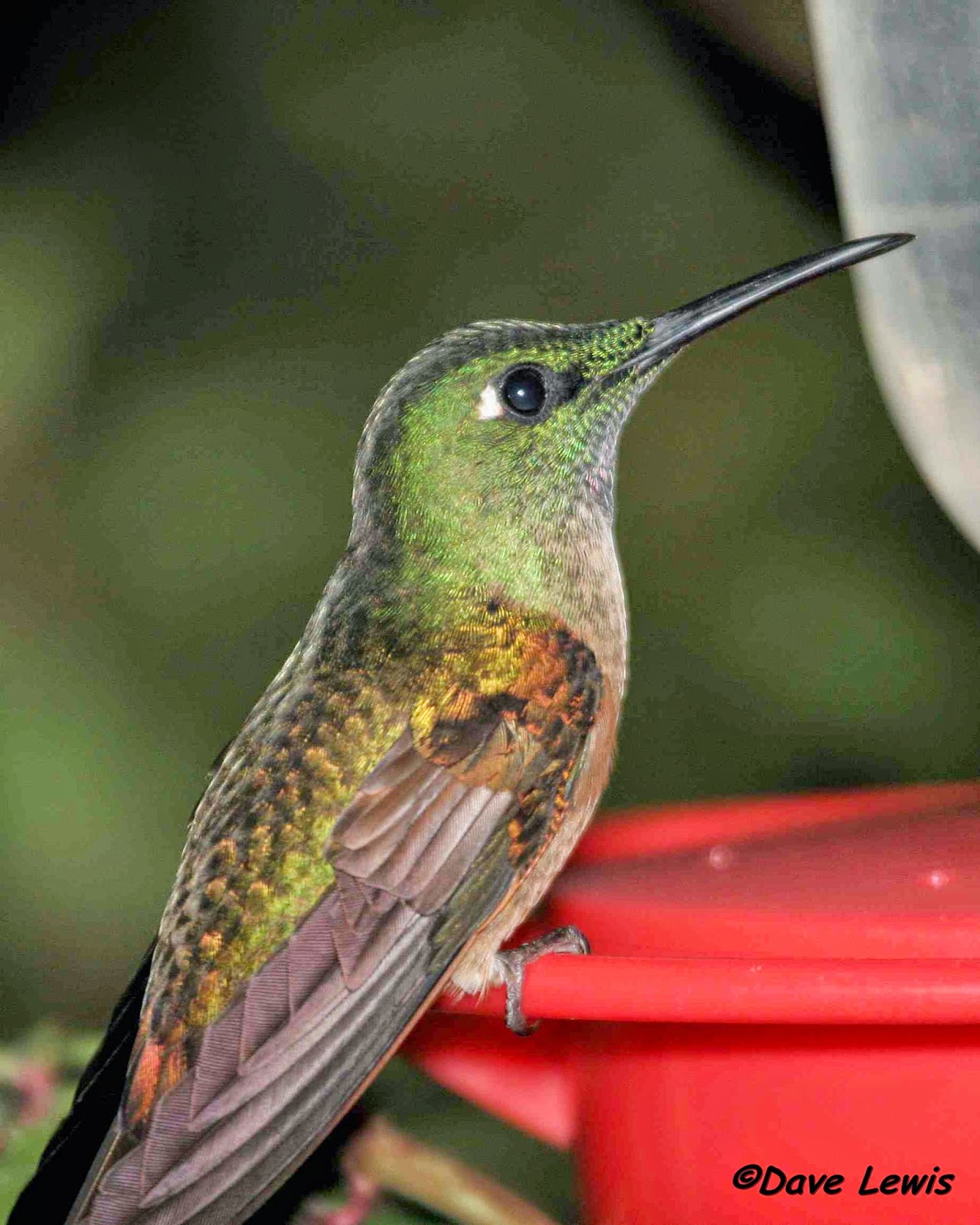
Fawn-breasted Brilliant.

 Fawn-breasted Brilliant, I think he actually made a sound!

 Great Sapphirewing or Green-crowned Brilliant...hmmm...which one was it?

 Now this is a Great Sapphirewing...I think...

This is a Green-crowned Woodnymph with a White-whiskered Hermit pretending to be the boogey man.

It's a Sapphire-vented Puffleg...cause he has puffy legs of course!

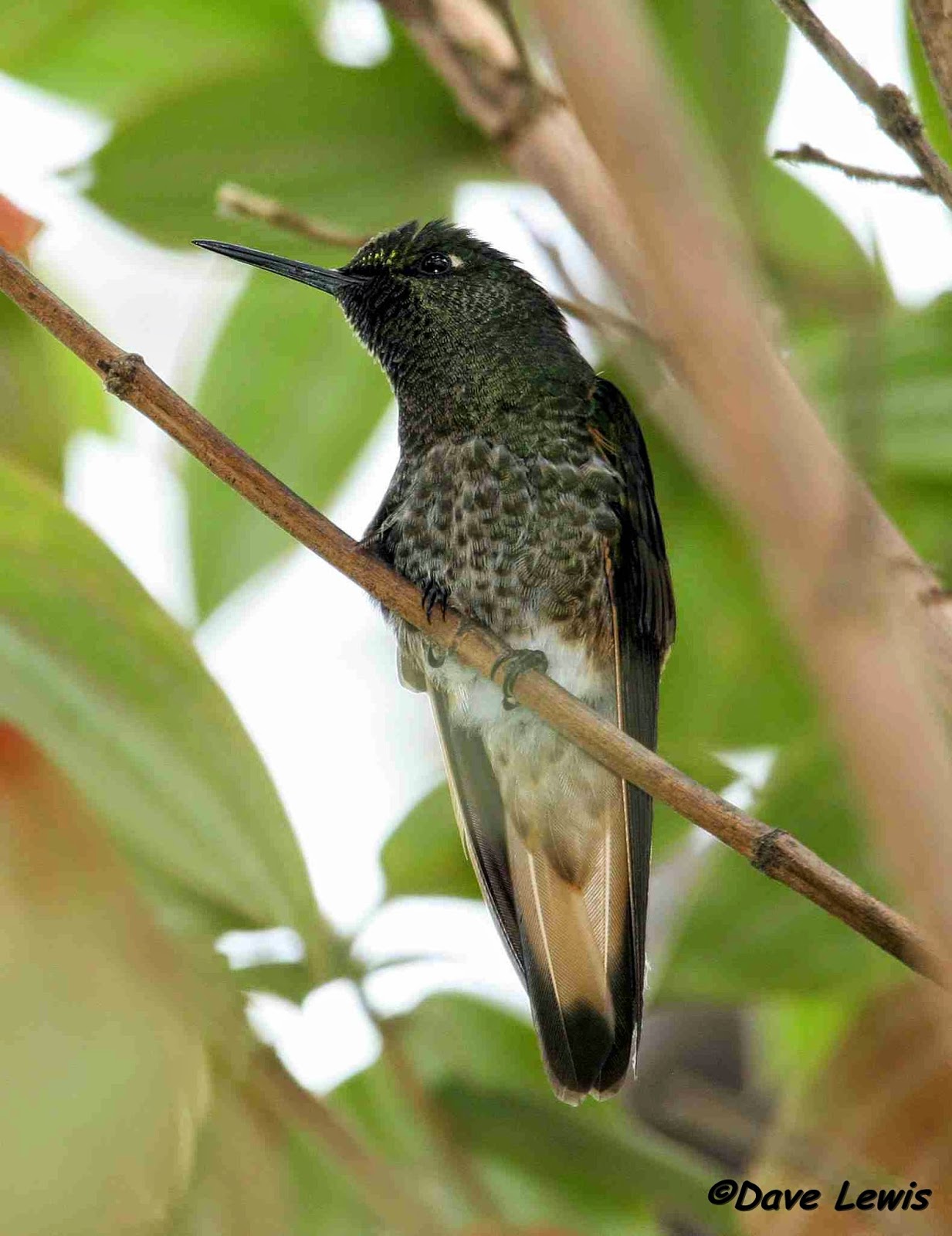
 Shining Sunbeam.
He truly was one a wet afternoon of jungle birding.

Yep, that bill really is that long on this Sword-billed Hummingbird!
 From base of the bill to the tail tip, this species averages 5.5" in length, not counting the 4" bill!

 Velvet-purple Coronet was my favorite hummingbird of our trip.
They looked gorgeous in the rain, very soft and velvety!

Violet-tailed Sylphs have crazy long tails to impress the ladies...
The things that men do for love...

White-whiskered Hermit...hey! That's like me when it gets below zero here!

If you value these hummers and all of the birds that live in Ecuador and the many that migrate to our neck of the woods in the spring, consider helping out the Las Gralarias Foundation. 
Every little bit helps!

Thanks!

Monday, May 6, 2013

Shhhhhh!!!

My good friend and excellent guide from Ecuador, Edison, found this American Woodcock hiding under a brush pile.

Don't tell anyone! I was feeling very under the weather Friday and couldn't make it to work...ack, ack... Amazingly enough, I was well enough to drive to Magee Marsh to catch the beginning of the spring spectacular...WARBLY MIGRATION! Shhhh...

What a gorgeous day to be out birding. Sun shining, nice breeze, 75 degrees, the birding life doesn't get any better...unless I was retired(not gonna happen.) In addition to all the great folks I haven't seen in a while, I saw 60 species of birdies, including 15 species of warbly things! AND I shot 637 photos, half of which I've already deleted so don't worry.

I think I'll spread these photos out over a few days...I wouldn't want to make you suffer through too many fuzzy butt shots!

 This Black-and-White Warbly couldn't figure out how my name was floating in mid air.
 
 First spring warbly booty!
 
 Isn't he precious?
That little bug killing machine...
 
 Blackburnian bootyliciousness...
 
 This lil warbly thing had me puzzled for a while.
The first person that spotted it said "Black-throated Green" and kept going.
It just didn't look right, that stripe on top of her head was a puzzlement.
When I looked in my copy of Chris Earley's Warbler guide, it turned out to be a female Blackburnian warbly! Cool, eh?
 
 Say bye-bye bug!
 
 "HEY! WHY AREN'T YOU AT WORK?!"
Cause I don't wanna.
 
 I don't think I've ever seen so many Blackburnian warblys at Magee!
Then again, I'm usually working...hmmmm...I think I'm feeling ill again...
 
 Getting sick of these guys yet?
I didn't think so...
 
 Even a color blind Loopy guy can appreciate the color of these warblys!

 
 I did photograph a couple of other birds in between those warbly things!
Like this snoozing Eastern Screech Owl.
 
That's Edison Buenano on the left. He helped us find well over 300 species on our short visit to the Mindo valley in Ecuador!
On the right is another friend and excellent photo and bird guide, Ian Campbell of Tropical Birding.


Stay tuned for more of my...
"EXCITING DAY OFF WITH THE BIRDS!"